The Similan Islands open only in season, cap visitors every day, and every seat goes through the park’s e-ticket system. Dive shops that take bookings and passenger details on their own website sell faster and keep more of each sale.
This guide is for dive shop and boat operators in Khao Lak and Thap Lamu: what your website needs, and what to prepare before each season opens.
What dive shops need to know about the Similans
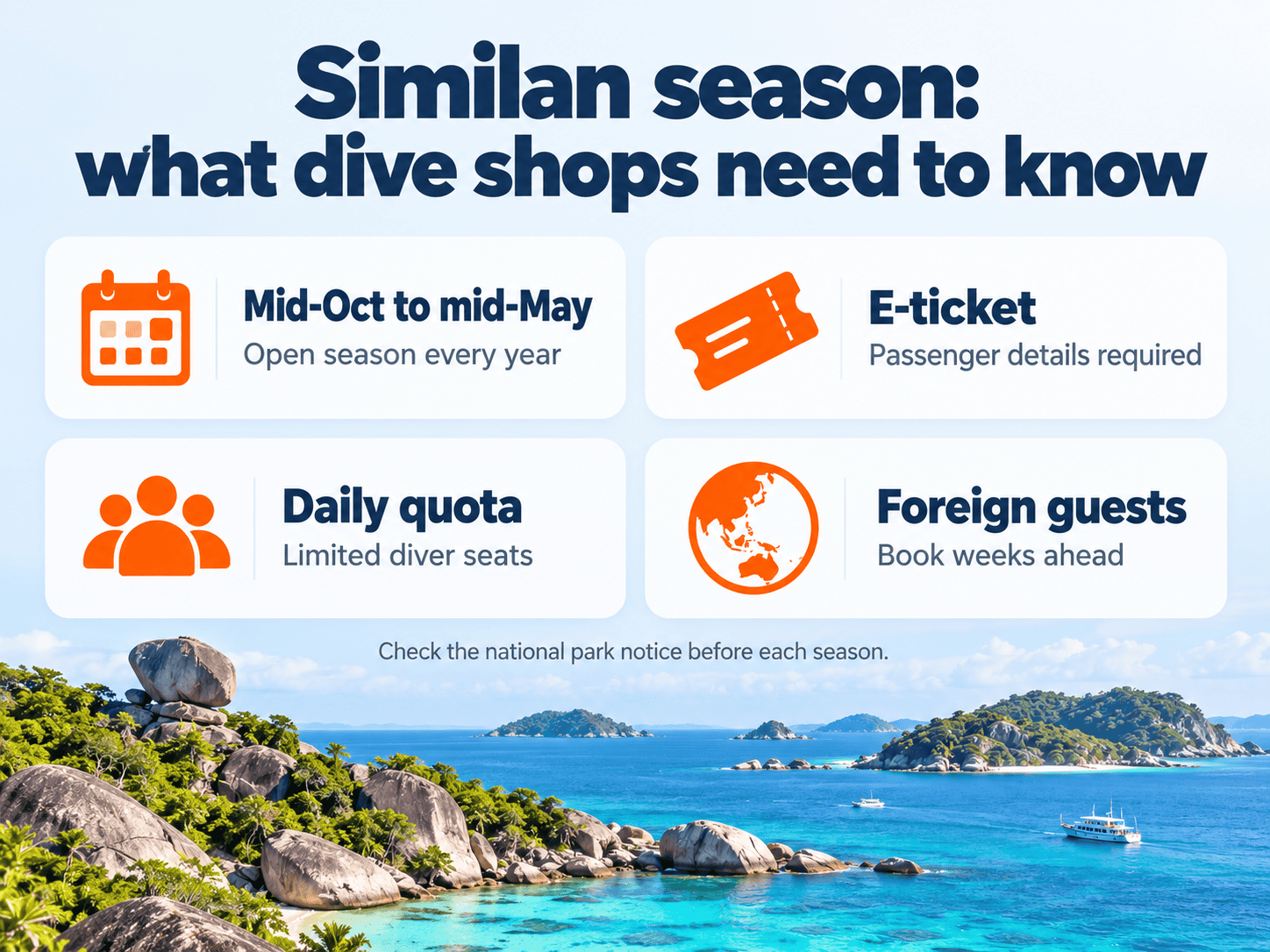
| Item | What dive shops should know |
|---|---|
| Open season | Usually mid-October to mid-May every year; closed in the monsoon for recovery |
| Park entry | E-ticket; operators register passenger details that match park records |
| Visitors per day | Daily quota, including a separate quota for scuba divers; numbers may change each season |
| Park fees | Different rates for Thai and foreign adults and children; state whether your price includes them |
| Overnight on islands | Not allowed (day trips or liveaboards) |
| Core guests | Foreign travellers who book weeks ahead and search in English |
Check opening dates, quotas and fees in the Department of National Parks notice before each season
Quotas and fees can change each season, so check the Department of National Parks notice before you sell. The principle doesn’t change: diver seats are limited, and whoever is easiest to book gets them first.
Why a Similan dive shop needs its own booking website
- Seats are capped every day. When the quota fills, guests book whichever shop lets them book instantly — not the one that replies to chat the next morning.
- E-tickets need matching passenger details. Operators must register passenger details that match the park’s records. Shops that collect everything at booking work faster than those chasing guests one by one.
- Your core guests are foreigners who plan ahead. European divers often book weeks before travelling, search in English, and are starting to ask AI “which Similan dive shop is best?”
- OTA commission comes straight off a fixed number of seats. Every seat sold through a marketplace typically costs around 20–30%.
What a dive shop website needs
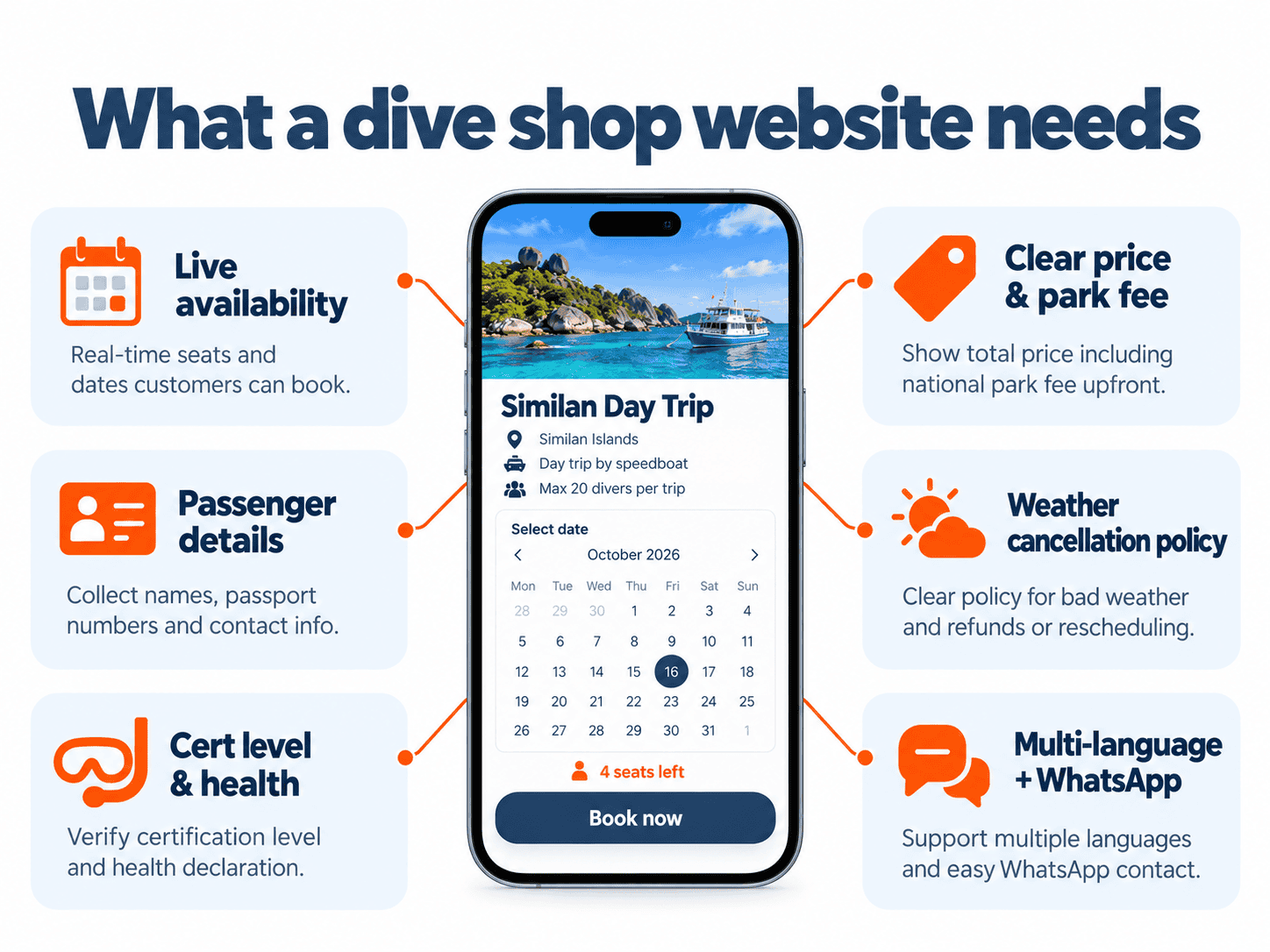
It doesn’t need to be big, but it must answer six things so guests can book without messaging you first.
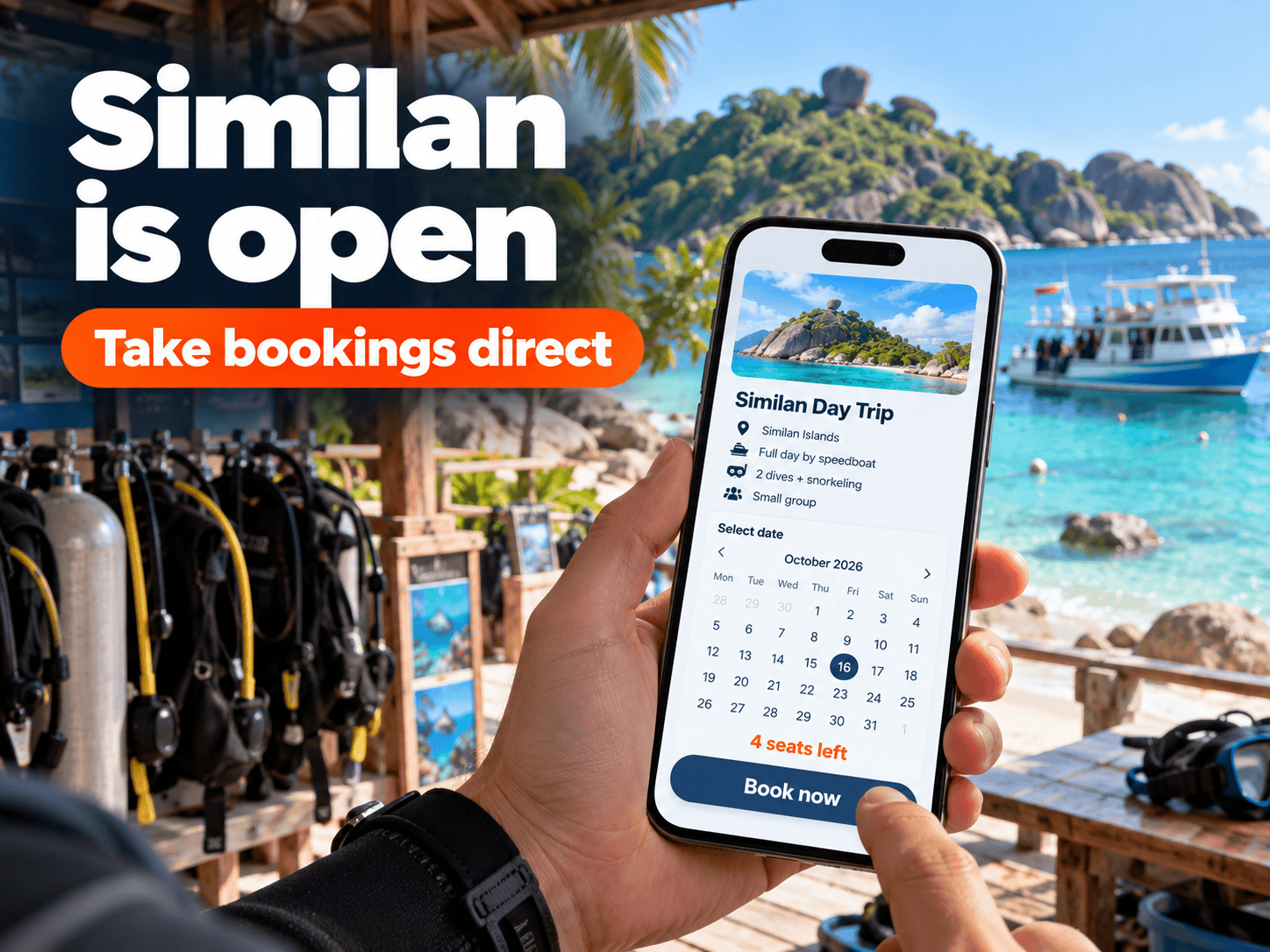
1. Live availability and instant booking
A calendar showing seats left per day, with an online deposit. Guests several time zones away don’t have to wait for a reply.
2. Passenger details collected at booking
The booking form should ask, once, for what you need to register with the park — name as in passport, nationality, travel date — so your team isn’t chasing details over chat. Store personal data securely under Thailand’s PDPA.
3. Certification level and health questions
Let guests choose fun dive, snorkel or course; add certification level, logged dives and a short medical questionnaire. You can plan groups and guides before the trip.
4. Clear prices, including whether the park fee is included
Park fees differ for Thai and foreign visitors. If your site doesn’t say whether the fee is included, you’ll answer the same question all season — and risk “hidden cost” reviews.
5. A clear weather cancellation policy
Andaman trips can be cancelled for wind and waves. State exactly how guests can reschedule or get a refund if the park suspends boats. Clarity makes people comfortable paying a deposit.
6. Multiple languages and WhatsApp
At minimum English and Thai; add German or a Scandinavian language if those are your main markets. Include a WhatsApp button for guests who want to ask first.
Direct bookings vs OTAs
Viator, GetYourGuide and Klook are good at finding new guests — there’s no need to drop them. But every seat booked direct is margin you don’t share.
| Aspect | Selling via OTA | Direct on your website |
|---|---|---|
| Commission | About 20-30% per seat | 0% only payment processing fees |
| Guest details | Whatever the platform passes on; you chase the rest | Everything you need for e-tickets and certification |
| Repeat guests | Contact via the platform | Email and WhatsApp for next season's offers |
| Strength | Reaches guests who don't know you yet | Full margin; you control price and policy |
OTA commission depends on each shop's contract and platform
Still wondering whether you need a website if you already have a Facebook page? Read whether a tour business with a Facebook page still needs a website.
Getting found by divers who ask AI
Travellers now ask Google AI Mode and ChatGPT for the best Similan dive shop. AI picks shops with clear information, clear prices, detailed reviews and consistent details everywhere — see getting your business recommended by AI.
Quick wins for dive shops:
- Name the sites you actually visit — Elephant Head Rock, Christmas Point, Koh Bon — instead of “the best dive sites”.
- State group size, guide-to-diver ratio and what equipment is included.
- Ask for detailed reviews, e.g. “saw a manta at Koh Bon”.
Get your website ready before the season opens
Start at least one to two months before the park opens, because foreign guests book ahead. A site that’s ready by September or early October captures the full December-to-March peak. If the season has already started, you can still begin with this 7-day checklist.
| Day | What to do |
|---|---|
| Day 1 | List all trips, prices, whether the park fee is included, seats per boat |
| Day 2 | Write the weather cancellation/reschedule policy and deposit policy |
| Day 3 | Build the booking form: passport name, nationality, certification, health |
| Days 4-5 | Set up the availability calendar and online deposits |
| Day 6 | Translate main trip pages (English plus your top market's language); add real trip photos |
| Day 7 | Add the booking link to Facebook, Instagram bio, TripAdvisor and email replies |
Deemmi builds direct booking on a WordPress website for Andaman tourism businesses — see our websites for businesses in Khao Lak and Phang Nga, or get a free website check / message us on WhatsApp.
Summary
Every Similan season combines high demand with limited seats. Shops that let guests book instantly, collect passenger details at booking and show clear prices will fill seats first — without paying commission on every one. Your website doesn’t need to be big; it needs to do these six things well.

FAQ
When are the Similan Islands open?
Usually from mid-October to mid-May, closing during the monsoon for natural recovery. Exact dates are announced each year by the Department of National Parks.
Does a small dive shop really need a website?
Yes, if you want foreign guests who book ahead. They search in English and want to book instantly, which a Facebook page alone handles poorly.
Should I stop selling on Viator or GetYourGuide?
No. OTAs help you reach new guests, but run a direct booking website alongside them so returning and referred guests can book without the roughly 20–30% commission.
What guest details should the booking form collect?
What you need to register with the park’s e-ticket system — name as in passport, nationality, travel date — plus certification level and a basic medical questionnaire, stored securely under the PDPA.
How long does a dive shop website take?
A site with booking and multiple languages typically takes 2–4 weeks depending on the number of trips and languages. Start at least one to two months before the park opens.
Sources to check every season
- Department of National Parks, Wildlife and Plant Conservation: Mu Ko Similan opening dates and quotas
- Mu Ko Similan National Park: e-ticket system and fees
- Tourism Authority of Thailand: Mu Ko Similan National Park